The modern internet operates on a profound architectural asymmetry. We generate vast oceans of data at the absolute edges of our lives—via our private conversations, intellectual workflows, personal devices, and household telemetry—yet we route this immense wealth into massive, centralized cloud silos for storage, processing, and analysis. This hyper-concentration has turned the digital web into a landscape of constant vulnerability, where catastrophic data breaches are inevitable and individual privacy is systematically treated as a commercial commodity.
To survive this hostile environment, a structural inversion is underway. The Architecture of Inversion treats the local edge not as a passive consumer of cloud intelligence, but as the primary locus of digital sovereignty. By pairing powerful local processing hardware with decentralized, privacy-preserving networks, we can enjoy the fruits of global digital coordination without exposing our private digital lives to external surveillance.
I. The Technical High Ground: Zero-Trust Local Nodes
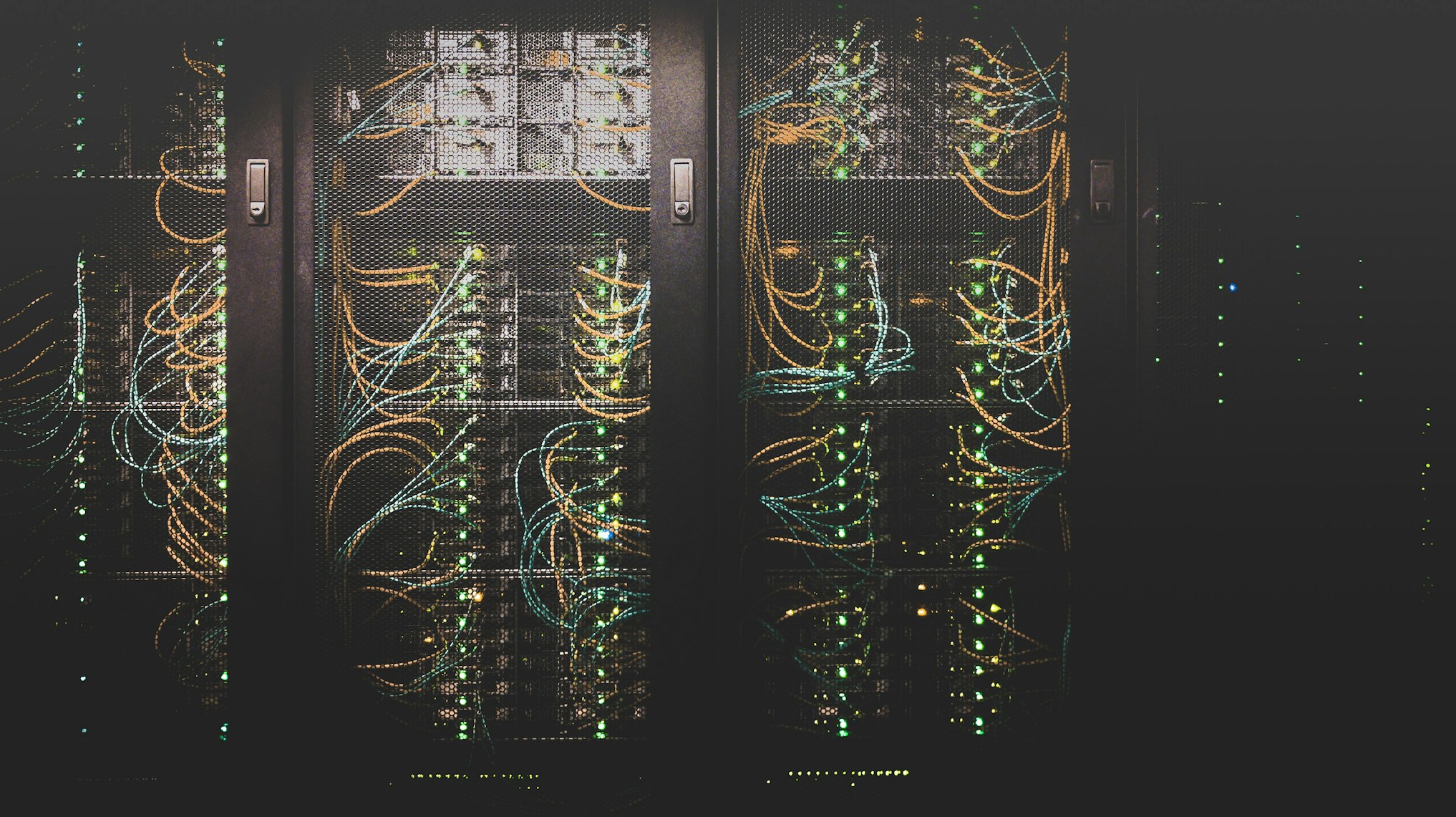
The technical pinnacle of the decentralized movement is the realization of the Zero-Trust Private Node. Instead of relying on a distant, black-box firewall managed by a third-party conglomerate, local devices form a tight, cryptographically secured perimeter. This physical isolation serves as the first line of defense, ensuring that raw data remains within the physical custody of the user.
In this inverted model, data processing happens entirely in situ, meaning all computation takes place directly on site. When you search through your personal history, index your team’s internal documentation, or run semantic analysis on your health metrics, the computation occurs entirely within the physical boundaries of your own hardware.
If coordination with an external node or a remote team member is required, the interaction is mediated through end-to-end encrypted peer-to-peer (P2P) networks and zero-knowledge proofs (ZKPs). By passing all external transactions through these continuous cryptographic authentication gates, the outside world can mathematically verify the validity of information without the system ever exposing the underlying raw data.
II. Societal Shift: The Return of the Digital Homestead
This architectural pivot mirrors a broader sociological movement: the migration away from public digital squares toward secure, private digital homesteads.
1. The Enclosure of Intellectual Capital
For creators, software developers, and independent enterprises, unique knowledge is the primary currency. Entrusting that knowledge to public cloud platforms exposes it to corporate data-scraping, unauthorized model training, and algorithmic dilution. Localized infrastructure allows teams to build highly dense “intellectual sanctuaries” where proprietary methodologies, custom codebases, and team wikis remain strictly private and under absolute ownership.
2. Resilience Against Network Volatility
As global networks become more fragmented and prone to localized outages, geopolitical friction, or arbitrary censorship, organizations reliant entirely on the cloud face immense systemic risks. A decentralized infrastructure ensures that even if the global internet backbone suffers a severe outage, the local area network (LAN) remains fully operational, self-contained, and smart.
III. Future Scenarios: Life in the Inverted Web
Scenario A: The Sovereign Collaborative Workspace
Consider a boutique consulting or specialized software engineering firm. They own no centralized cloud servers and pay no subscriptions to third-party database giants, yet their distributed team collaborates seamlessly across continents.
Every document, codebase, and strategic brief is mirrored across a secure, peer-to-peer mesh network running directly on their local hardware. Their internal AI tools index their shared knowledge base locally on each machine. There is no central database for malicious actors to hack, no subscription service to arbitrarily revoke, and absolute privacy is maintained as an inherent property of the network architecture.
Scenario B: The Smart Home as an Isolated Organism
Future residential environments will feature hundreds of integrated sensors tracking energy consumption, environmental air quality, biometric baselines, and security perimeters. Instead of transmitting these highly personal domestic telemetry streams to an external corporate cloud server, a local, micro-kernel home server digests the information.
It adjusts automation profiles, manages local energy storage, and flags maintenance anomalies entirely offline. The home functions as an intelligent, self-contained biological cell, completely secure from external digital intrusions or profiling.
Conclusion
Privacy is not merely the passive hiding of information; it is the active maintenance of structural control. The path toward a mature, resilient digital society requires us to dismantle the monolithic dependencies of the cloud and invest in the sovereignty of our local environments. By building secure, local nodes and connecting them through privacy-preserving networks, we ensure that our digital spaces remain what they were always meant to be: safe harbors for human thought, creativity, and connection.