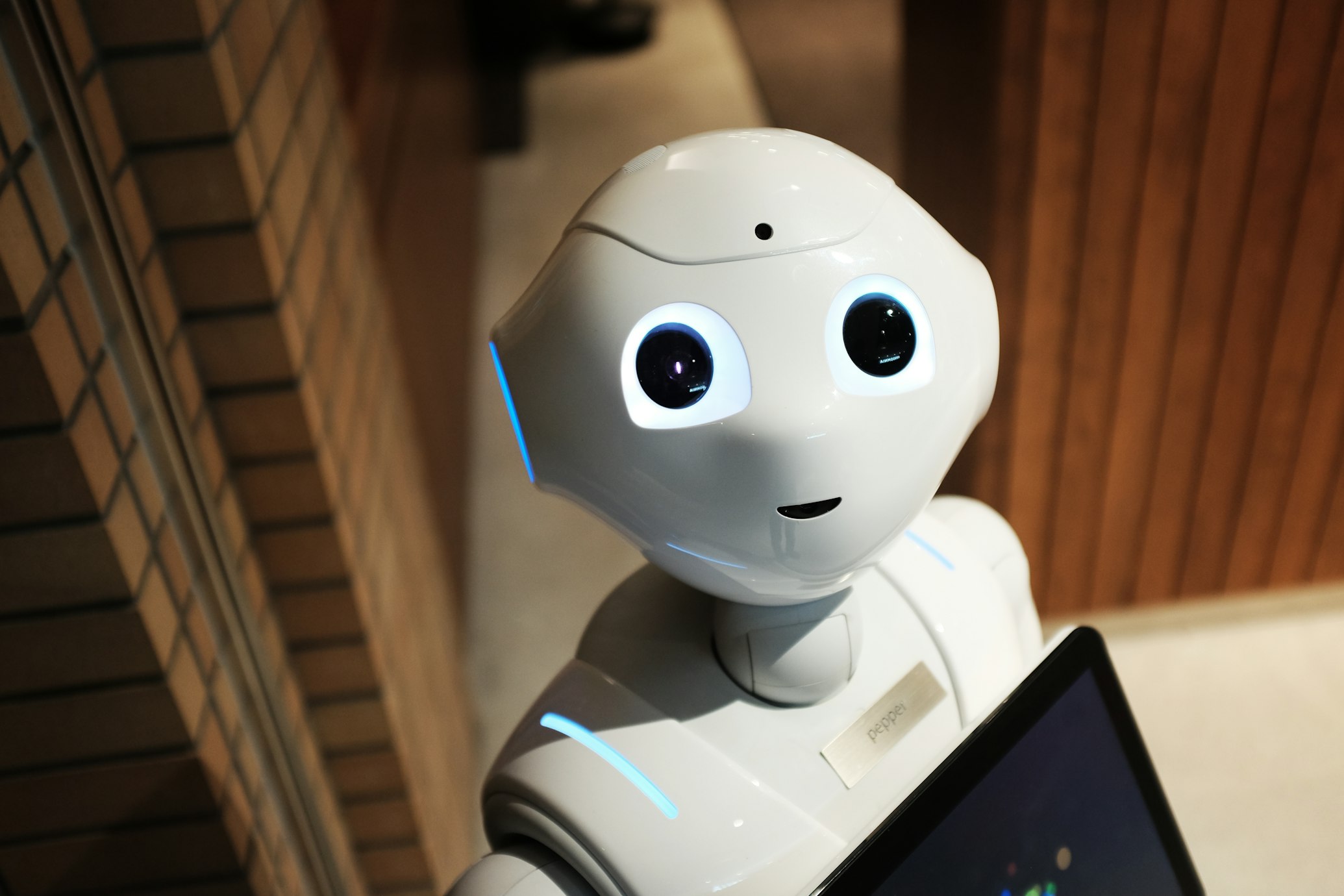
For generations, the narrative surrounding industrial automation, machine learning, and robotics has been framed through the lens of a zero-sum conflict. It is consistently portrayed as a binary struggle where machines advance, algorithms optimize, and human labor inevitably retreats into obsolescence. However, as we step into an era characterized by highly distributed, cognitively aware control architectures, this traditional paradigm is collapsing under its own rigidity.
We are transitioning away from mere ‘automation’—the blind, scripted replication of repetitive tasks—and moving toward a highly structured, bi-directional symbiosis. The technical high ground is no longer about removing human hands from the loop; instead, it focuses on constructing an intuitive, fluid interface where human creative intent and machine execution operate as a unified, harmonious system.
I. The Strategic Apex: Beyond Programmable Logic
Traditional industrial automation relied heavily on deterministic, top-down programming paradigms. A machine or a robotic arm executed a precise, pre-compiled sequence of motions. Any minute variance in the physical environment—such as a thermal shift in raw materials, an unexpected micro-vibration, or a minor structural misalignment—invariably resulted in systemic faults, emergency shutdowns, and costly human intervention.
[Human High-Level Intent] ➔ [Cognitive Edge Inference] ➔ [Real-Time Physical Adjustment] ➔ [Actuator Execution] ▲ │ └───────────────── [Sensor Feedback Loop] ─────────┘
The modern transformation shifts this operational burden to localized, closed-loop adaptive systems. By injecting cognitive inference capabilities directly into programmable logic controllers (PLCs), edge gateways, and mechanical actuators, machines now possess a form of structural self-awareness. Equipped with high-frequency acoustic, inertial, and kinematic sensors, these systems detect micro-frictional anomalies and interpret environmental stresses in real time, calculating and executing physical compensations autonomously without throwing errors.
The true breakthrough of this era lies in Contextual Delegation. Human operators are elevated from the exhausting task of manual dynamic adjustment to high-level systemic orchestrators. We define the broader intent, the safety guardrails, and the efficiency optimization targets; the localized machine swarm automatically figures out the intricate physical mechanics required for execution.
II. Societal Resonance: The Rise of the Craft-Engineer
As this technological shift deepens, it is neutralizing the classic industrial alienation of labor and catalyzing a profound reorganization of the workforce, transforming society in two distinct ways:
1. The Erasure of Cognitive Friction
Historically, operating complex industrial machinery or integrating multi-layered software systems required navigating abstract, counter-intuitive command-line interfaces or rigid dashboards. The modern convergence of ambient sensing and natural language processing allows the machine to adapt to human behavior, communication styles, and workflows, rather than forcing the human to think like a binary microprocessor.
2. The Emergence of Micro-Manufacturing Cells
Massive, centralized, and hyper-rigid assembly lines are giving way to agile, micro-manufacturing networks. Empowered by highly adaptive, self-indexing machinery that runs on modular firmware, small teams of specialized “craft-engineers” can rapidly pivot local production lines. They can design, test, and manufacture highly customized, complex electromechanical systems on demand without requiring millions of dollars in corporate re-tooling capital.
III. Horizon Scenarios: Labor in the Decade of Autonomy
Scenario A: The Self-Configuring Industrial Collective
In a modern systems integration facility, robotic arms, automated guided vehicles (AGVs), and structural testbeds share a decentralized local network. When a new product design file is dropped into the local environment, the machinery does not wait for an automation engineer to spend weeks writing new instructional code.
Instead, the devices collectively consult their shared engineering knowledge base, run millions of internal kinematic simulations, assess current component wear across the fleet, allocate sub-tasks among themselves, and configure the entire physical assembly line autonomously within minutes.
Scenario B: Symbiotic Infrastructure Maintenance
In critical public infrastructure—such as high-speed rail networks, subterranean utility conduits, or mega-scale bridge structures—continuous vibration, tension, and stress tracking systems are linked directly to autonomous maintenance units.
When automated sensors identify an structural anomaly, they do not merely log a passive alert on a distant server. They dispatch localized, adaptive drones and robotic repair units that apply targeted physical dampening or structural reinforcements in real time. These complex physical interventions are executed autonomously at the edge, under the high-level remote supervision of a human engineer miles away.
Conclusion
The trajectory of autonomous systems is not leading toward an empty factory floor, but toward an empowered human intellect. By offloading mechanical friction, micro-second tracking adjustments, and hazardous physical labor to localized machine intelligence, human labor returns to its true calling: creative problem solving, holistic architectural design, and the pursuit of engineering excellence. The path forward is one of shared capability, where human ingenuity is amplified by the silent, relentless precision of autonomous networks.